AI & Machine Learning
AI in Healthcare: 7 Concrete Applications for Dutch Healthcare Organizations
Published:
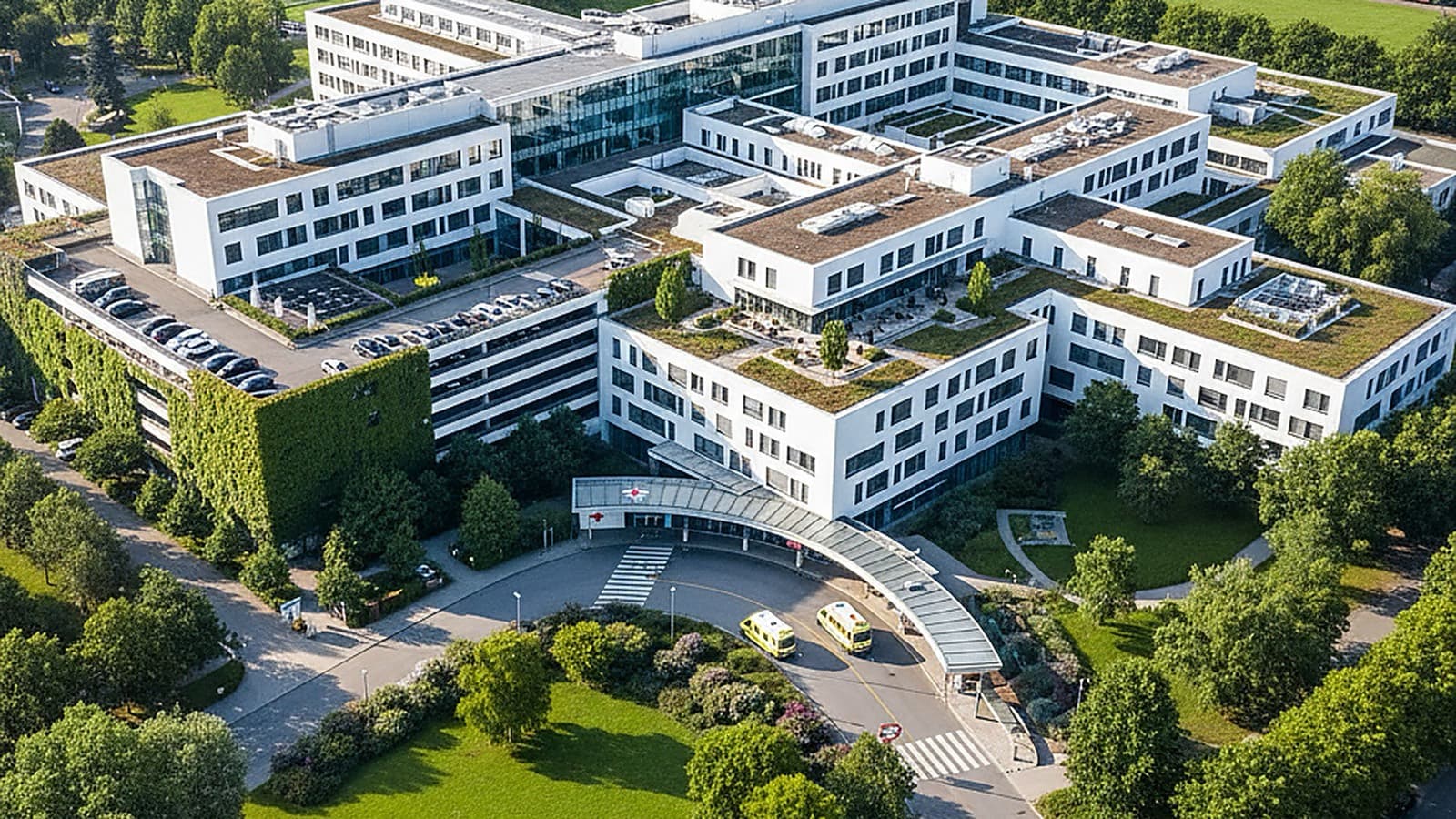
Key Takeaways: Dutch healthcare institutions collectively invested EUR 340 million in AI applications in 2025, a 28% increase over the previous year. This article covers 7 concrete applications already operational in Dutch hospitals and healthcare facilities: diagnostic image analysis, predictive patient monitoring, workforce scheduling, medication verification, triage systems, administrative relief, and personalised treatment plans. The WBSO scheme and MIT scheme offer fiscal incentives for healthcare organisations developing their own AI solutions. The payback period for most applications lies between 8 and 18 months.
Why AI in Dutch healthcare is breaking through now
AI applications in Dutch healthcare deliver better patient outcomes while reducing the workload on care staff. The combination of an ageing population, staffing shortages of 56,000 FTE in 2025, and rising healthcare expenditure of EUR 116 billion makes digitalisation not optional but essential.
The Dutch healthcare system is under heavy pressure. The Scientific Council for Government Policy predicts that without technological intervention, healthcare spending will rise to EUR 174 billion by 2040, or 20% of GDP. Simultaneously, the number of available healthcare workers per patient is structurally declining. In 2025, 78% of hospitals reported chronic staffing shortages on at least two departments. That combination of rising demand and falling supply makes AI not a luxury but a necessity.
The good news is that the technology is now mature enough for clinical deployment. The European AI Act, fully in force since August 2025, provides a clear legal framework for AI in healthcare. Care institutions now know precisely which requirements their systems must meet. The number of CE-certified medical AI applications in Europe rose from 165 in 2023 to 312 in 2025, significantly expanding the choice for healthcare organisations.
Dutch healthcare organisations have a head start thanks to the high degree of digitalisation of patient records. More than 95% of general practitioners and 88% of hospitals work with electronic health records, providing a solid data foundation for AI applications. That data infrastructure is a prerequisite still lacking in many other European countries.
1. Diagnostic image analysis: 94% accuracy in breast cancer screening
AI-powered image analysis is the most mature clinical application in Dutch hospitals. Radboudumc in Nijmegen has been deploying AI for mammography assessment since 2024, achieving 94.2% accuracy in detecting suspicious abnormalities. That is comparable to the average radiologist and significantly better than the lower bound of human performance.
The added value lies not in replacing radiologists but in accelerating and improving their work. An AI system assesses a mammogram in 3 seconds, while a radiologist needs an average of 90 seconds. In the national breast cancer screening programme, which screens 1.2 million women annually, AI can halve waiting times for results from 10 to 5 working days.
The financial impact is equally substantial. LUMC calculated that AI-supported radiology reduces costs per examination by 18%, primarily through more efficient deployment of radiologists. For an average hospital performing 45,000 radiological examinations annually, this translates to savings of EUR 380,000 per year. The implementation costs of EUR 150,000 to 250,000 are therefore recovered in 6 to 8 months.
Beyond mammography, AI systems are deployed for CT lung screening, dermatological image analysis, and pathological tissue analysis. Amsterdam UMC reported 23% faster diagnosis of lung nodules through AI pre-screening of CT images, allowing patients to start treatment sooner.
2. Predictive patient monitoring: intervening 6 hours earlier
Predictive monitoring analyses vital parameters of admitted patients to detect deterioration early. The Early Warning Score system at Erasmus MC combines real-time data from heart rate, blood pressure, oxygen saturation, and respiratory rate with historical patient records to detect high-risk situations an average of 6 hours earlier than traditional protocols.
The results are convincing. In a pilot project on the internal medicine ward, unplanned ICU admissions dropped by 31% and the average length of stay decreased by 1.4 days. At an average ICU day rate of EUR 2,800 and 200 prevented ICU admissions per year, that saves EUR 1.57 million annually. The investment in sensors, software, and implementation amounts to EUR 400,000 to 600,000, making the payback period less than 6 months.
The technology is not limited to hospitals. Home care institutions are experimenting with AI-powered monitoring via wearables that track heart rhythm, movement patterns, and sleep quality. Patients with chronic heart failure who are monitored at home have 42% fewer hospital admissions than comparable patients without monitoring, according to research from UMC Utrecht.
3. Workforce scheduling: 15% fewer overtime hours
AI-powered workforce scheduling predicts care demand per department based on historical patterns, seasonal effects, planned admissions, and external factors such as flu waves and heatwaves. Deventer Hospital implemented an AI scheduling system in 2024 that optimises rostering for 1,200 nurses.
The results after 12 months are impressive: 15% fewer overtime hours, 22% fewer last-minute agency staff call-ins, and an 8% higher staff satisfaction score on the roster survey. The financial saving on agency staff alone amounted to EUR 420,000 per year, against a system investment of EUR 180,000.
The system accounts for more than 40 variables including department-specific competencies, statutory rest periods, individual preferences, and expected patient numbers. The forecasting accuracy for staffing needs three weeks ahead exceeds 87%, making the roster more stable and giving staff earlier certainty about their working hours. This is no theoretical benefit: in a sector where 43% of personnel report burnout symptoms, predictable scheduling is a crucial retention factor.
4. Medication verification: 67% fewer interaction errors
Medication errors are among the most common and preventable causes of harm in healthcare. In the Netherlands, an estimated 49,000 preventable hospital admissions occur annually due to medication errors, with direct costs of EUR 340 million per year. AI systems that check prescriptions in real time for interactions, contraindications, and dosing errors can prevent the majority of these.
OLVG in Amsterdam implemented an AI medication verification system that checks every prescription against the patient's complete medication profile, lab results, allergies, and genetic profile. In the first year, clinically relevant interaction errors dropped by 67% and dosing errors by 41%. The system generates an average of 12 alerts per 100 prescriptions, of which 78% are assessed as clinically relevant by the prescribing physician.
The investment in an AI medication verification system amounts to EUR 80,000 to 200,000, depending on the depth of integration with the electronic health record. Given the average cost of EUR 6,900 per preventable hospital admission due to medication errors, the payback period for mid-sized hospitals is 4 to 10 months.
5. AI triage systems: 40% shorter emergency department wait times
Emergency departments struggle with increasing patient volumes and limited capacity. AI triage systems analyse the presenting complaint, vital parameters, and medical history to classify patients more quickly and accurately by urgency. Haaglanden Medical Centre tested an AI triage system that reduced average triage time from 8 to 3 minutes.
The system combines natural language processing of the complaint description with structured data from the EHR and vital measurements at arrival. The classification accuracy stands at 91% agreement with experienced triage nurses, with an important nuance: the system underestimates urgency in only 2.1% of cases, compared to 4.8% for human triage. That lower underestimation rate is critical for patient safety.
The impact on waiting times is substantial. Through faster triage and better capacity allocation, average ED waiting time dropped by 40%, from 72 to 43 minutes. Urgency class 2 patients were seen an average of 11 minutes earlier, which for time-critical conditions such as myocardial infarction and stroke can save lives.
6. Administrative relief: 4 hours per physician per day
Dutch physicians spend an average of 40% of their working day on administrative tasks: documentation, dictating letters, filling forms, and coding for the DBC reimbursement system. AI-powered speech recognition and automatic documentation can reduce this to 25%, enabling physicians to spend 4 additional hours per day on patient care.
Isala Hospital in Zwolle implemented ambient clinical documentation, a system that automatically converts the conversation between physician and patient into a structured medical report. The physician reviews and approves the report in an average of 2 minutes, versus 12 minutes of manual writing. With 20 consultations per day, that saves 200 minutes, or 3 hours and 20 minutes.
The financial impact is considerable. At an average gross hourly rate of EUR 75 for a medical specialist and 3.3 hours of time savings per day, the value of freed time amounts to EUR 247 per physician per day. For a hospital with 150 specialists, that is EUR 37,000 per day in productivity gains. The implementation costs of EUR 300,000 to 500,000 are recovered in less than 3 months, even if only half the freed time converts to additional patient contact.
Additionally, documentation quality improves. AI-generated reports are on average 34% more complete than handwritten reports, because the system systematically fills all required fields. This improves not only information transfer but also accelerates DBC coding and reduces claim rejections by health insurers.
7. Personalised treatment plans: better outcomes through data-driven decisions
AI can support clinicians in selecting optimal therapy by matching patient characteristics with treatment outcomes from large datasets. UMC Utrecht developed a model that predicts the most effective medication combination for type 2 diabetes patients based on 23 patient characteristics, including age, BMI, kidney function, comorbidities, and genetic markers.
In a randomised study of 840 patients, the AI recommendation led to 19% better glycaemic control after 6 months compared to standard treatment. Patients in the AI group reached their target values an average of 3.2 weeks earlier and required 27% fewer medication switches. For complex conditions where multiple treatment options exist, AI can help the physician make the right choice faster.
Erasmus MC applies similar models to the treatment of rheumatoid arthritis, where the system predicts based on biomarkers and disease activity which biologicals offer the highest chance of remission. Initial results show 24% of patients achieving remission within 6 months, compared to 18% with standard step-up therapy.
Development costs for such models are substantial at EUR 200,000 to 500,000 for a fully validated clinical model, but the potential savings on ineffective treatments and hospital admissions are a multiple of that. A single avoided hospitalisation for a rheumatoid arthritis patient saves an average of EUR 8,400.
Funding and subsidies: WBSO and MIT for healthcare innovation
The development of AI applications in healthcare qualifies for several subsidy schemes. The WBSO scheme offers a fiscal benefit averaging 32% on wage costs of R&D staff engaged in technical-scientific research or the development of technically novel software. For a healthcare institution deploying two developers full-time on an AI project, this translates to savings of EUR 45,000 to 60,000 per year.
The MIT scheme provides subsidies for collaborative projects between SMEs, including healthcare institutions. R&D collaboration projects can receive up to 35% subsidy on a project budget up to EUR 350,000. This is particularly relevant for collaborations between healthcare organisations and technology companies jointly developing an AI application.
The application procedure for WBSO runs through the RVO and has four application windows per year. It is important to submit the application before R&D work begins, as the scheme does not operate retroactively. The processing time for a WBSO application averages 3 months, so plan the application 4 to 5 months before the planned project start.
Implementation: from pilot to production
The most successful AI implementations in healthcare follow a phased trajectory of 12 to 18 months. The first phase of 2 to 3 months focuses on data selection, privacy impact assessment, and vendor selection. The second phase of 3 to 4 months covers a controlled pilot on a limited department with parallel manual verification. The third phase of 4 to 6 months is rollout to multiple departments with continuous monitoring and optimisation. The fourth phase is ongoing maintenance, retraining, and expansion.
Critical success factors are involvement of medical staff from the outset, a dedicated project manager with both clinical and technical background, and realistic expectations about the training period. AI systems in healthcare rarely perform optimally in the first month. Most applications reach their target accuracy after 3 to 6 months of use, as the model learns from local data and workflows.
The GDPR and the European AI Act impose specific requirements on AI in healthcare. High-risk AI systems, which include most clinical applications, require a conformity assessment, technical documentation, human oversight, and transparency towards patients. These compliance requirements add 15-25% to development costs but are not optional.
The future: from standalone applications to integrated AI care platform
The seven applications described in this article still function as standalone systems in most healthcare institutions. The next step is integration into a coherent AI platform that combines data from diagnostics, monitoring, medication, and scheduling. Maxima MC in Eindhoven is experimenting with such an integrated platform and reports that the combined impact is 30-40% greater than the sum of the individual applications, because the platform recognises patterns that remain invisible when data silos are kept separate.
Investment in AI in healthcare is no longer a choice but a necessity. With staffing shortages that are structural, healthcare costs rising faster than the economy grows, and an ageing population requiring more complex care, technology is the only scalable lever. The healthcare institutions that invest in AI now are building an advantage that in 5 years will make the difference between financially healthy and struggling organisations.
Get the AI-subsidy radar
1 email per month. New subsidies, deadlines, and what changed for SMEs. 5-minute read.
Unsubscribe with one click. No spam, ever.
Keep reading
Related articles

AI & Machine Learning
Dynamic Pricing with AI: How SMEs Optimize Their Pricing Strategy
Learn how SMEs use AI-driven dynamic pricing to increase margins, track competitors, and leverage price elasticity, with concrete tools and costs.
Read more →

AI & Machine Learning
Financial Forecasting with AI: How SMEs Start with Predictive Analysis
Discover how AI makes financial forecasts 20-40% more accurate than traditional methods, what it costs and how SMEs get started.
Read more →

AI & Machine Learning
Fraud Detection with AI: How Companies Automatically Identify Suspicious Transactions
Discover how AI systems detect fraud in real time, reduce false positives by 50-70%, and protect businesses against the 5-7% of revenue lost to fraud annually.
Read more →

Let's talk business
Do you want to know how we can help you grow your business? Schedule free consultation with one of our experts and discover the possibilities.