Supply Chain
AI in Logistics: From Forecasting to Route Optimization
Published:
Key Takeaways: AI is transforming the logistics sector across five concrete domains: demand forecasting for warehouses, route optimization, predictive maintenance, automated warehousing, and supply chain visibility. Logistics companies implementing these technologies achieve 10-30% fuel savings, 25-40% less unplanned downtime, and significantly lower operational costs. This article details each application with the numbers behind it, a pragmatic implementation plan, and relevant subsidy opportunities for Dutch companies.
Demand Forecasting for Warehouses: The Foundation of Smart Logistics
Accurate demand forecasting forms the foundation on which all other logistics optimizations are built. AI-powered forecasting for warehouses achieves accuracy levels 25 to 45 percent higher than traditional methods, which directly translates into more efficient inventory management, better capacity planning, and lower costs.
The difference from traditional forecasting lies in the complexity AI can handle. Where conventional methods work with historical averages and seasonal corrections, machine learning models integrate hundreds of variables. External factors such as weather conditions, raw material prices, geopolitical developments, and even shipping traffic in major ports are weighed alongside internal data on order patterns, lead times, and return flows.
DHL invested over 2 billion euros in digitalization and calls AI-powered forecasting one of their most impactful applications. Their systems predict freight volumes per corridor up to three weeks ahead, enabling proactive rather than reactive capacity management. The result is a utilization rate 15 percentage points higher than traditional planning.
For Dutch logistics providers, operating in one of the most densely networked logistics regions in the world, accurate forecasting is exceptionally valuable. The Port of Rotterdam processes over 14 million TEU containers annually. Companies that predict their inbound volumes more accurately can deploy warehousing capacity more efficiently and better manage peak periods.
Implementation begins with centralizing historical data. A minimum of two years of transaction data forms the basis for reliable models. Cloud platforms like AWS Forecast and Azure ML offer pre-built supply chain models that lower the barrier to entry. The investment for a mid-sized logistics company typically ranges from 25,000 to 60,000 euros, with payback periods of three to nine months through better capacity utilization and lower buffer stock levels.
Route Optimization: 10-30% Fuel Savings and Faster Deliveries
AI-powered route optimization calculates the most efficient routes in real time by combining thousands of variables that no human planner can consider simultaneously. Logistics companies typically report 10 to 30 percent fuel savings, depending on the complexity of their distribution network and their starting point.
The classic "travelling salesman problem" is approached fundamentally differently by AI than by traditional planning software. Where conventional systems use static optimization based on distance, AI systems integrate dynamic factors: real-time traffic information, weather conditions, loading and unloading times per location, vehicle capacity, and even expected parking situations at delivery addresses.
UPS saves over 400 million dollars annually with their ORION system, which performs 25 million route calculations daily for 100,000 drivers. The system eliminated 100 million driven miles per year, equivalent to a CO2 reduction of 100,000 tons. ROI was realized within the first year despite an implementation investment of hundreds of millions.
Dutch logistics companies operate in a compact but congested network where small efficiency gains have outsized impact. A regional distribution company with 50 vehicles implemented AI route planning and reduced total kilometers driven by 18%. Fuel costs dropped by 22% and average delivery time improved by 12 minutes per stop. The 75,000 euro investment paid for itself within five months.
The technology is evolving toward multimodal optimization, where AI calculates the optimal combination of transport modes. For a shipment from Rotterdam to Munich, the system might determine that inland waterway transport to Duisburg combined with road transport for the final leg is cheaper, faster, and more sustainable than full road transport. This cross-modal optimization delivers additional savings of 5-15% on top of route optimization.
Predictive Maintenance on Fleet: 25-40% Less Unplanned Downtime
Predictive maintenance with AI forecasts when vehicles and logistics equipment will need servicing before a failure occurs. This replaces traditional schedule-based maintenance with data-driven decisions that deliver 25 to 40 percent less unplanned downtime at typically lower total maintenance costs.
The financial impact of unplanned maintenance in logistics is significant. A stranded truck costs a transport company an average of 500 to 1,200 euros per day in lost revenue, replacement transport, and reputational damage. For a fleet of 100 vehicles where an average of 5% experience unplanned downtime, this adds up to hundreds of thousands of euros annually.
Sensors in modern vehicles continuously generate data on engine performance, tire wear, braking behavior, oil quality, and hundreds of other parameters. Machine learning models analyze these data streams and detect subtle patterns indicating impending failures, often weeks before a human mechanic would notice anything. The accuracy of these predictions exceeds 85% with well-trained models.
Maersk implemented predictive maintenance on their container fleet and reported a 30% reduction in unplanned downtime in the first year. Additionally, total maintenance costs decreased by 12% because components were replaced at the optimal moment, neither too early nor too late. The data collected during predictive maintenance also provides insights for procurement decisions on new vehicles.
Implementation requires IoT sensors on the fleet, a data platform for storage and processing, and machine learning models trained on historical maintenance and sensor data. For a fleet of 50 vehicles, the investment typically ranges from 40,000 to 100,000 euros, including sensors, platform, and model development. The payback period is six to twelve months, driven by lower downtime costs and more efficient maintenance scheduling.
Automated Warehouse Management: Faster, More Accurate, More Scalable
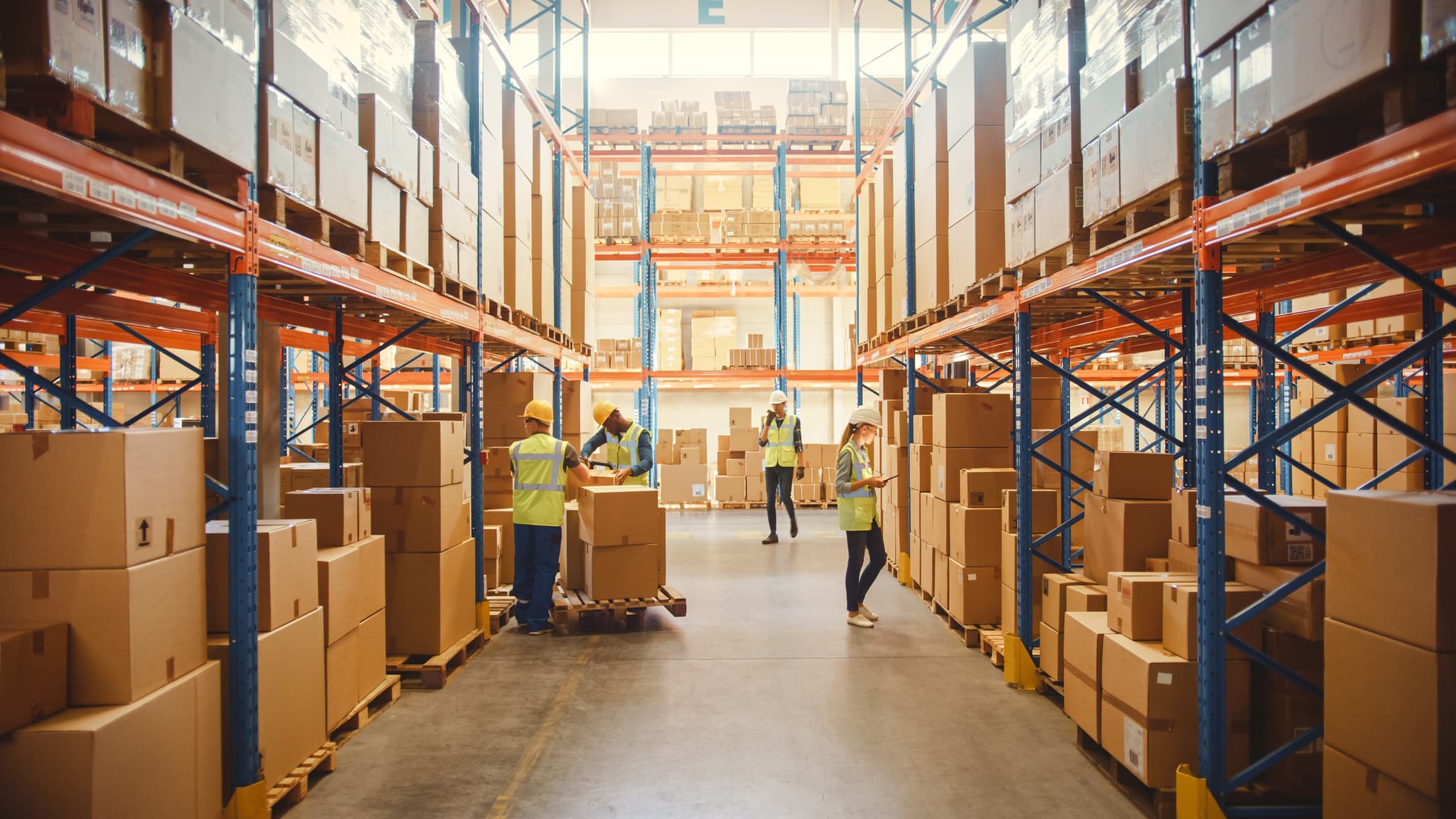
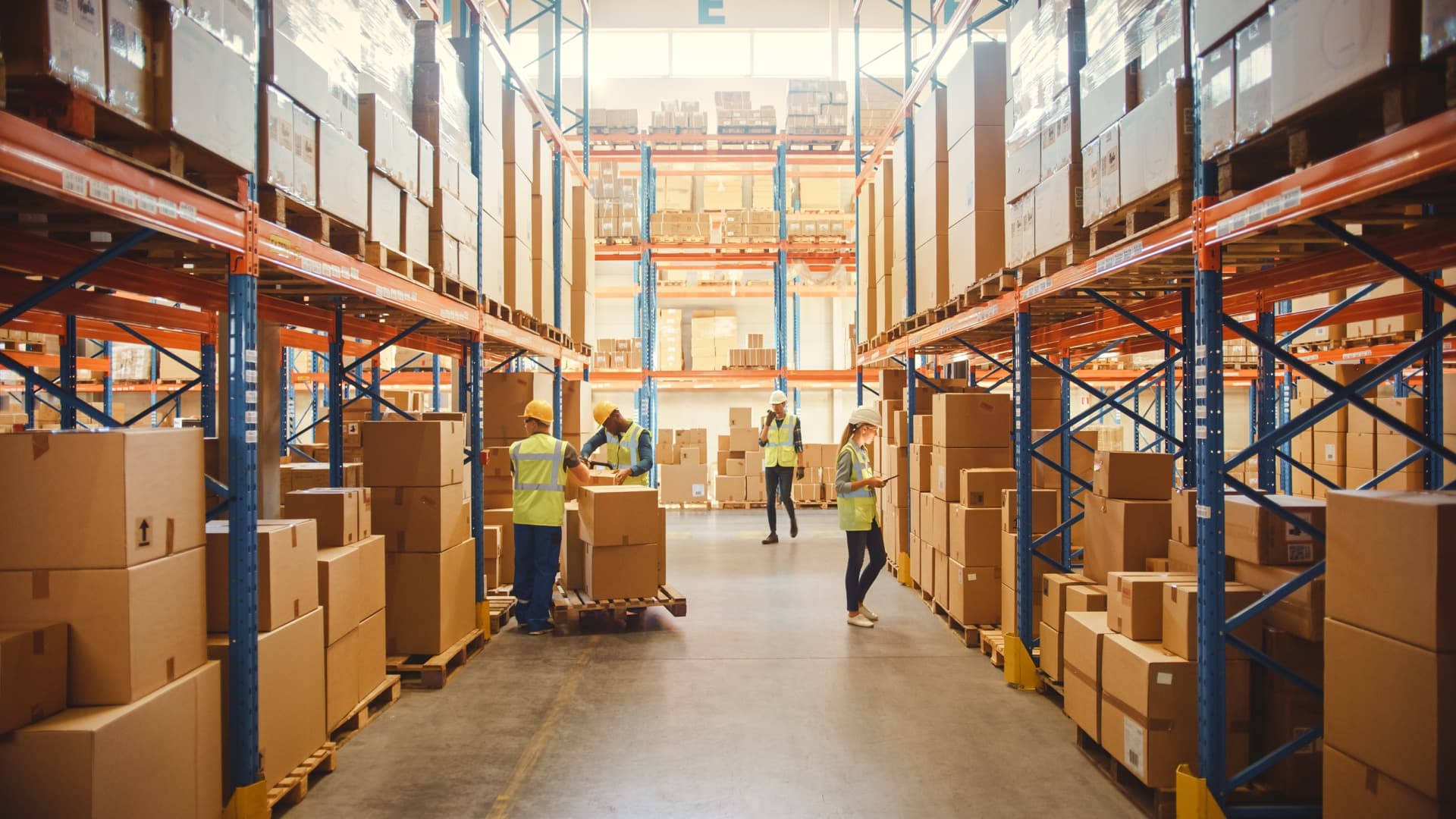
AI-driven warehousing optimizes every aspect of warehouse operations, from slotting and pick routes to labor deployment and quality control. The combination of machine learning, computer vision, and robotics typically increases warehouse throughput by 20-40% while simultaneously reducing error rates.
The complexity of modern warehousing makes AI indispensable. An average distribution center processes thousands of order lines per day, with each product in a specific location, a specific pick process, and specific packaging requirements. The traditional approach of fixed racking layouts and sequential pick lists leaves significant optimization potential untapped.
AI-powered slotting optimization places products based on expected demand, correlations with other products, and ergonomic factors. Fast-moving items are positioned at ergonomically optimal height near shipping stations. Products frequently ordered together receive adjacent locations. This dynamic system continuously repositions products based on changing demand patterns.
Amazon's fulfillment centers demonstrate the potential of AI in warehousing. Their systems process over 400 items per hour per worker, compared to the industry average of 100-150. While Amazon's scale is unique, the principles apply to any distribution center. Dutch 3PL companies that implemented AI-driven pick route optimization report 25-35% higher pick productivity.
Computer vision for quality control and inventory counting is a rapidly growing application. Cameras combined with image recognition inspect incoming goods for damage, verify pallet composition, and perform cycle counts without interrupting the operational process. The error margin in AI-driven inventory counts is below 0.1%, compared to 2-5% for manual counts.
The investment in warehouse AI varies widely depending on the desired level of automation. Software-only optimization of pick routes and slotting starts at 20,000 euros. A fully integrated system with robotics and computer vision can exceed 500,000 euros, but delivers proportionally higher savings.
Supply Chain Visibility and Anomaly Detection
AI-powered supply chain visibility gives logistics companies a complete, real-time overview of their entire chain, with automatic detection of deviations and proactive alerts when disruptions threaten. In a world where supply chain disruptions have become the norm, this capability is of strategic importance.
McKinsey calculated that supply chain disruptions cost companies an average of 45% of one year's profits over a ten-year period. The pandemic, the Suez Canal incident, and geopolitical tensions have demonstrated how vulnerable global chains are. AI does not prevent disruptions, but it enables earlier detection and faster response.
Anomaly detection works by training machine learning models on the normal pattern of your supply chain: lead times, quality levels, volume fluctuations, and cost patterns. When the system detects deviations, even subtle shifts that would not trigger alarms in conventional systems, it automatically generates an alert with context and recommended actions.
Flexport built an AI system that detects ocean freight delays an average of 12 days earlier than traditional tracking. This gives shippers time to plan alternative routes, inform customers, or draw on buffer inventory. The value of that extra reaction time is significant: logistics managers estimate that each day of earlier warning reduces the impact by 5-10%.
In practice, a visibility platform means integrating data from all chain partners: suppliers, carriers, customs authorities, ports, and customers. API connections and EDI messages form the data network; AI models analyze the combined data stream. The investment for a mid-sized logistics company ranges from 30,000 to 80,000 euros for the platform, plus 5,000 to 15,000 euros per year for maintenance and data integrations.
Implementation Approach for Logistics Companies
A pragmatic implementation approach starts with identifying your biggest pain points and quantifying the potential value. The logistics sector is characterized by thin margins, meaning every investment must prove itself quickly.
Begin with an assessment of your current data infrastructure. AI models are only as good as the data that feeds them. Many logistics companies possess more usable data than they realize: TMS logs, WMS transactions, vehicle telemetry, customer feedback, and financial data together form a rich foundation. The challenge is often unlocking and connecting these data sources, not a lack of data itself.
Next, select a first use case with high impact and low complexity. Route optimization is often an excellent starting point: the data is typically available, the results are quickly measurable, and the ROI is compelling. Demand forecasting is another strong starting point if you have at least two years of historical data.
Work in sprints of eight to twelve weeks toward a working minimum viable product. Test the model on a limited portion of your operation and measure carefully. Compare AI recommendations with your current approach in parallel during the first few weeks before switching to the AI-driven method. This parallel phase builds confidence among the operational team and identifies edge cases requiring adjustment.
Subsidies for AI in Logistics
The logistics sector is one of the industries where the Dutch government actively stimulates AI innovation. Several subsidies are specifically suited to the applications described in this article.
The WBSO is particularly relevant for logistics AI projects. Developing prediction models, optimization algorithms, and computer vision systems qualifies as technical innovation. The effective benefit for SMEs is 32% on the first 350,000 euros of R&D labor costs. A route optimization engine or predictive maintenance model almost always falls under this program.
The MIT program is ideal for starting an AI trajectory. The feasibility study variant subsidizes 35% of costs (up to 20,000 euros) to investigate which AI applications are most valuable for your specific operation. The collaborative R&D variant subsidizes larger projects in partnership with a knowledge institution.
The SLIM subsidy supports upskilling logistics personnel in working with AI tools and data-driven decision-making. At 60% subsidy for SMEs, this program makes it affordable to train your planners, warehouse managers, and fleet managers in using new technology.
Strategically stacking these subsidies reduces your total investment by 30-50%. A typical trajectory combines a MIT feasibility study in the first quarter, WBSO-funded development in quarters two and three, and SLIM-subsidized training for the operational team in quarter four. Stratalytic guides logistics companies through both technical implementation and maximizing available subsidies. More information is available on our logistics sector page.
Get the AI-subsidy radar
1 email per month. New subsidies, deadlines, and what changed for SMEs. 5-minute read.
Unsubscribe with one click. No spam, ever.
Keep reading
Related articles
Supply Chain
Supply Chain Analytics: How Machine Learning Makes Your Logistics 15% More Efficient
Discover how ML applications like demand forecasting and route optimization reduce supply chain costs and improve sustainability.
Read more →
Supply Chain
Predicting Supply Chain Risks with AI: A Guide for Dutch Companies
Discover how AI detects supply chain risks early, from supplier failure to geopolitical disruptions, and how Dutch companies practically implement this technology.
Read more →
Supply Chain
Demand Planning: Process, Tools Compared and When AI Pays Off (2026)
What is demand planning, which tools exist from Excel to enterprise software, and when does an AI forecast on your own data beat the standard packages? A practical guide for trade and e-commerce.
Read more →

Let's talk business
Do you want to know how we can help you grow your business? Schedule free consultation with one of our experts and discover the possibilities.