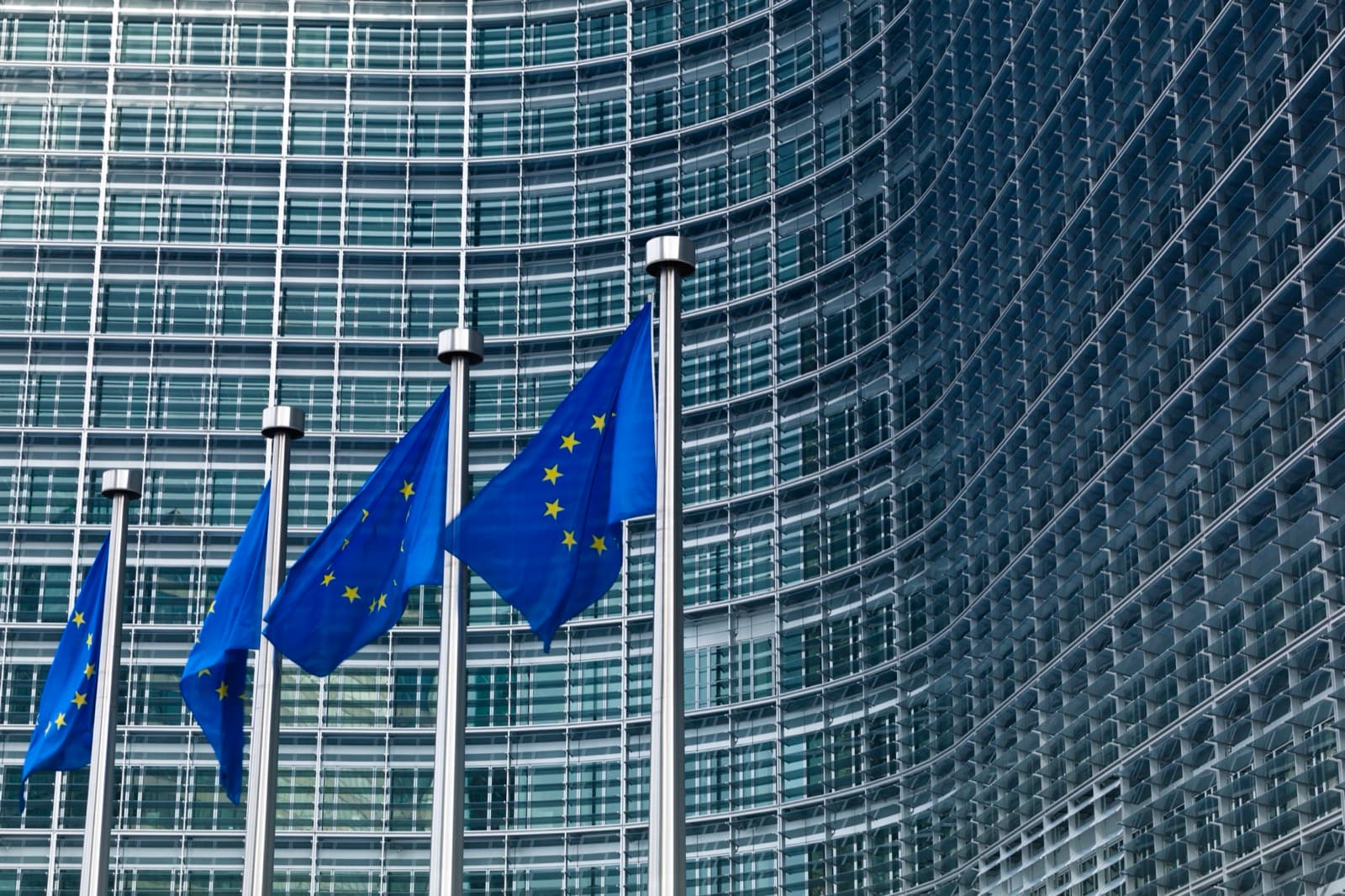
EU AI Act
EU AI Act Compliance, Subsidies Cover Your Costs
The EU AI Act makes AI literacy legally required by August 2, 2026. Non-compliance risks fines up to €35 million. Multiple subsidies, SLIM, WBSO, MIT, and free EDIH services, cover your compliance costs. Stratalytic handles assessment, subsidy applications, and implementation.
Updated: May 2026
2 aug 2026
AI literacy required
€35M
Maximum fine
60%
SLIM reimbursement
Gratis
EDIH guidance
Quick answer
- EU AI Act (Regulation 2024/1689) entered force 1 August 2024. AI literacy obligation for all operators of AI systems takes effect 2 August 2026.
- Risk-based: prohibited / high-risk / limited-risk / minimal-risk. Most SME AI use cases are limited or minimal risk, but documentation duties still apply.
- Non-compliance fines: up to €35M or 7% of global turnover for prohibited practices; €15M / 3% for high-risk non-conformity.
- Funding the work: SLIM (60% of literacy training, up to €25k), WBSO (R&D on compliance tooling), free EDIH advice.
- Stratalytic delivers an AI Act gap-assessment, the SLIM-funded training, and any custom compliance tooling.
Status & timing
When can you apply?
For most schemes the opening date is what counts, the budget is often gone on day one. Here's the live status.
SLIM (individueel mkb)
Closed, next round- Next opening
- March 1, 2027 (estimated)
- Allocation
- lottery on opening day
- Start prep
- ~5 weeks ahead
- Rate
- 60% (micro tot 80%)
- Max
- €24.999
- Budget
- €71,9 miljoen (totaal SLIM 2026)
The budget is usually gone on opening day. Order is decided by lottery, so submitting earlier doesn't help, make sure your complete application is ready on day one.
Don't miss the opening day
Leave your region and email. We'll reach out personally, well before SLIM (individueel mkb) opens, to check whether you qualify and prepare your application so it's ready on day one.
01
What is the EU AI Act?
The EU AI Act is the world's first comprehensive legal framework for artificial intelligence. Adopted in 2024, the regulation takes a risk-based approach: AI systems are classified into four risk categories (unacceptable, high-risk, limited and minimal risk), with obligations scaling accordingly.
The timeline is staggered. Prohibited AI practices (such as social scoring and manipulative AI) were banned from February 2025. Rules for general-purpose AI models apply from August 2025. The broadest wave of obligations hits on August 2, 2026: AI literacy becomes mandatory for all organizations, and high-risk AI systems face full compliance requirements including conformity assessments, documentation, and human oversight.
For Dutch SMEs, the most immediate obligation is Article 4: AI literacy. Every organization that deploys AI, from ChatGPT to automated analytics, must ensure staff understand what AI can and cannot do. Non-compliance carries fines up to €15 million or 3% of global turnover. The good news: multiple Dutch and EU subsidy schemes cover your compliance costs.
02
AI literacy: what Article 4 requires by August 2026
Article 4 of the EU AI Act is deceptively simple: organizations that deploy or develop AI systems must ensure that their staff have sufficient AI literacy. This applies to everyone who operates AI, supervises its output, or makes decisions based on AI-generated results. The deadline is August 2, 2026.
AI literacy does not require every employee to become a data scientist. It means they must understand the basics of how AI works, recognize when AI is being used in their tools, critically evaluate AI outputs, and understand the risks and limitations. The required depth depends on the employee's role and the risk level of the AI systems they work with.
Crucially, this obligation applies to all organizations that use AI, not just those developing it. If your team uses AI-powered software, CRM with predictive features, automated reporting, chatbots, or generative AI tools, you fall under Article 4. The SLIM subsidy covers 60% of the training costs to get your team compliant.
03
Subsidies that cover AI Act compliance costs
Four subsidy schemes together cover the full spectrum of AI Act compliance costs. Strategically combining them maximizes your reimbursement and minimizes your out-of-pocket investment.
SLIM: covers 60% of AI literacy training costs, up to €24,999 per application. This directly funds your Article 4 compliance. Two application rounds per year via RVO. See our SLIM subsidy page for details and deadlines.
WBSO: provides a 36% tax credit (50% for starters) on R&D hours spent developing or adapting AI systems to meet compliance requirements. If your AI systems need technical modifications for transparency, documentation, or human oversight, WBSO subsidizes the development work. See our WBSO page.
MIT: the MIT scheme funds feasibility studies (up to €20,000) and R&D collaboration projects (up to €350,000). Use it to assess your AI compliance gap, evaluate technical solutions, or collaborate with research institutions on compliance frameworks. See our MIT page.
EDIH network: European Digital Innovation Hubs offer free AI Act compliance guidance, test-before-invest services, and access to AI testing infrastructure. No application needed for initial consultations, you simply engage with your regional hub.
04
High-risk AI: additional obligations
Beyond AI literacy, organizations using high-risk AI systems face substantially stricter requirements. High-risk categories include AI used in employment and recruitment, creditworthiness assessment, education and training, critical infrastructure, law enforcement, and biometric identification.
For high-risk systems, the AI Act requires: a conformity assessment before deployment, comprehensive technical documentation, a quality management system, detailed logging and monitoring, transparency measures so users know they are interacting with AI, and effective human oversight mechanisms. The provider (developer) bears primary responsibility, but deployers (users) also have explicit obligations.
The WBSO is particularly relevant here: the technical work needed to make AI systems compliant, adding transparency features, building monitoring systems, creating documentation pipelines, qualifies as R&D and can be subsidized at 36-50%. Combined with MIT for the initial feasibility assessment, you significantly reduce the cost of high-risk compliance.
05
SME-specific provisions in the AI Act
The EU AI Act explicitly recognizes the needs of small and medium-sized enterprises. The regulation includes multiple provisions designed to prevent disproportionate compliance burdens on SMEs while still maintaining safety standards.
Key SME provisions include: reduced conformity assessment fees: SMEs pay proportionally lower costs for mandatory assessments. Priority access to regulatory sandboxes: member states must establish at least one sandbox by August 2026, with SMEs receiving preferential treatment. Simplified documentation: where proportional, SMEs can use streamlined versions of technical documentation and quality management systems.
Additionally, national competent authorities are required to consider SME interests when drafting guidelines and enforcement policies. The European AI Office provides dedicated guidance documents for SMEs, and the EDIH network specifically targets SME support with free services including compliance assessments, training, and access to testing infrastructure.
06
How Stratalytic helps with AI Act compliance
Stratalytic offers a unique combination: AI implementation expertise and subsidy advisory in one integrated service. We don't just tell you what the AI Act requires, we help you comply and fund the entire process through subsidies.
Our approach starts with a free AI Act compliance assessment. We inventory your AI systems, classify their risk levels, map your team's AI literacy gaps, and identify which subsidy combination maximizes your reimbursement. You receive a concrete compliance roadmap with timelines, costs, and expected subsidy coverage.
From there, we handle everything: SLIM applications for AI literacy training (which we also deliver), WBSO applications for technical compliance work, and connecting you with EDIH services. One partner from assessment to full compliance, no separate consultants for subsidies, legal advice, and implementation. That integrated approach saves time, reduces costs, and ensures nothing falls through the cracks before the August 2026 deadline.
Process
How does it work?
Free AI Act assessment
We inventory your AI systems, classify risk levels, map AI literacy gaps, and identify the optimal subsidy combination for your organization.
Subsidy application
Stratalytic writes and submits SLIM, WBSO, and MIT applications, stacking subsidies to maximize coverage of your compliance costs.
Compliance implementation
We deliver AI literacy training, implement technical compliance measures, and ensure your organization is fully AI Act-compliant before the August 2026 deadline.
FAQ
Frequently asked questions
What is the EU AI Act?+
The EU AI Act is the world's first comprehensive AI legislation. The regulation governs the development, provision, and use of AI systems in the European Union. It employs a risk-based approach: the higher the risk of an AI system, the stricter the requirements. The regulation enters into force in stages, with the first obligations around AI literacy taking effect on August 2, 2026.
When does the EU AI Act become enforceable?+
The EU AI Act enters into force in stages. From February 2, 2025, prohibited AI practices are banned. From August 2, 2025, rules for general-purpose AI models apply. From August 2, 2026, AI literacy becomes mandatory (Article 4) and most other obligations take effect, including requirements for high-risk AI systems. Organizations should start preparing for compliance now.
What does the AI literacy obligation entail?+
Article 4 of the EU AI Act requires organizations that deploy or develop AI systems to ensure their staff have sufficient AI literacy. This means employees must understand what AI is, how it works, what its limitations are, and what risks are involved. The obligation applies to everyone who operates, supervises, or makes decisions based on AI output.
What are the fines for non-compliance?+
The EU AI Act imposes severe penalties: up to €35 million or 7% of global annual turnover (whichever is higher) for using prohibited AI practices. For violations of other obligations, such as the AI literacy requirement, fines can reach €15 million or 3% of turnover. For providing incorrect information to authorities, fines can reach €7.5 million or 1% of turnover.
Which subsidies help with AI Act compliance?+
Four key schemes cover AI Act compliance costs. The SLIM subsidy reimburses 60% of AI training costs (up to €25,000). The WBSO provides a 36-50% tax credit on development hours for compliant AI systems. The MIT scheme finances feasibility studies for AI compliance. And the EDIH network offers free AI Act compliance guidance and test-before-invest services.
How does the SLIM subsidy help with AI Act compliance?+
The SLIM subsidy is the direct match for the AI literacy obligation under Article 4. The scheme reimburses 60% of costs for training your employees in AI literacy, up to a maximum of €24,999 per application. You comply with the legal requirement and receive reimbursement for most of the costs. In 2026 there are two application rounds via RVO.
How do I start with AI Act compliance?+
Start with an AI Act compliance assessment: inventory which AI systems your organization uses and which risk category they fall into. Then map the AI literacy needs of your team. Identify which subsidies apply and create a compliance roadmap. Stratalytic performs this assessment for free and guides you through the entire process, from subsidy application to implementation.
What is a regulatory sandbox under the AI Act?+
A regulatory sandbox is a controlled testing environment set up by national supervisory authorities. Organizations can develop and test AI systems under supervision without having to comply with all obligations immediately. Member states must have at least one sandbox operational by August 2026. Sandboxes offer SMEs priority access and provide a low-barrier way to innovate within AI Act frameworks.
Does my SME also need to comply with the AI Act?+
Yes, the AI literacy obligation applies to all organizations that use or deploy AI systems, regardless of size. Does your business use ChatGPT, AI-powered CRM, automated data analysis, or other AI tools? Then you fall under the AI Act. The good news: the law provides SME-specific provisions such as reduced supervisory fees, simplified procedures, and priority access to regulatory sandboxes.
What SME-specific exemptions does the AI Act offer?+
The AI Act deliberately includes SME-friendly provisions. Small and medium-sized enterprises pay reduced fees for conformity assessments, receive priority for regulatory sandboxes, and benefit from simplified documentation requirements where proportionally possible. Additionally, supervisory authorities must consider the interests and needs of SMEs when drafting guidelines and enforcement policies.
Can I stack subsidies for AI Act compliance?+
Yes, and that is exactly what makes this so compelling. You can use SLIM for AI literacy training, WBSO for developing or adapting AI systems to compliance requirements, MIT for a feasibility study into your AI compliance, and the EDIH network for free advice and testing facilities. By strategically combining these schemes, you cover a significant portion of your compliance costs.
Why handle AI Act compliance through Stratalytic?+
Stratalytic combines AI expertise with subsidy knowledge, a unique combination. We perform the compliance assessment, identify the optimal subsidy combination, write the applications, and deliver the AI training and implementation. One partner for the entire journey: from inventory to compliant AI use, maximally subsidized. No separate advisors for subsidies, compliance, and training, but one integrated approach.
Sources & official references
Verified information from authoritative sources
Start your AI Act compliance, subsidized
Schedule a free AI Act compliance assessment. We map your obligations, identify the best subsidy combination, and handle everything from application to implementation.