 Book an intro callIntro call
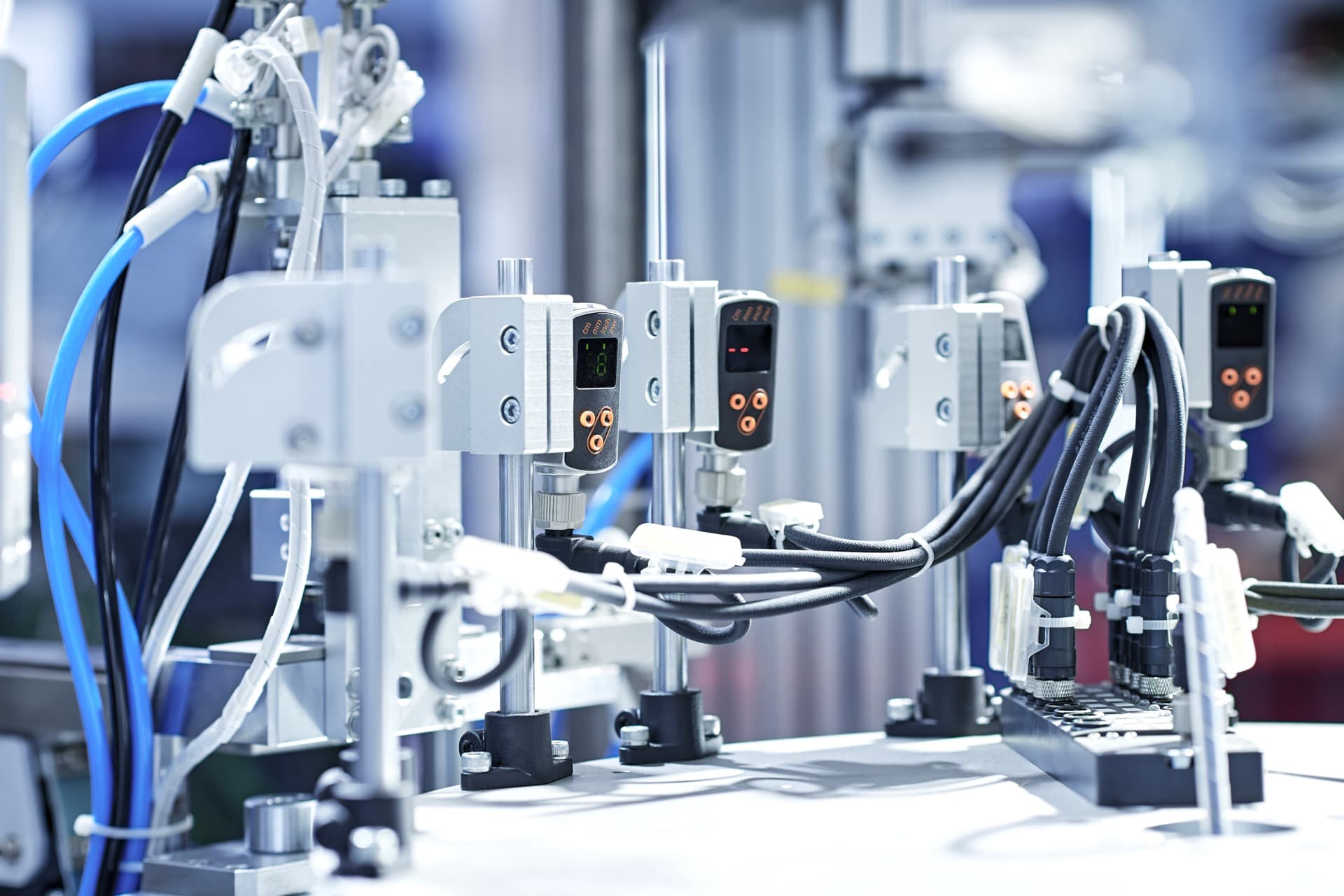



Retyped orders, a spreadsheet next to the ERP, a planning that lives in one head. That can work differently.
For manufacturers, wholesalers and logistics. At a wholesaler, nobody retypes over 3,300 of 5,017 order emails anymore. We start with one job that pays off within weeks, on the systems already in place, and the team keeps control. If the current way of working wins, there is no proposal.
Rather talk right away? Book an intro call
- 2 out of 3Order emails at a wholesaler nobody retypes anymore
- 84%Accurate quote prediction at Masparts
- 2-4 wkTo something that works
- Exact
- AFAS

- Dynamics 365



Start with the work that keeps piling up
Pick the question that fits. Every route starts with the same first step: a 30-minute intro call, without obligation.
Orders from email and PDF into the ERP
Order emails, PDFs and CMRs read and staged as draft orders. Someone on the team approves.
Read moreNo more retyping
Manual work in orders, intake and admin disappears; exceptions go to someone on the team.
Read moreERP, webshop and Excel connected
Integrations that raise an alert when something hangs, not a Zap that silently breaks.
Read moreInventory and purchasing on a forecast
A forecast that is right more often: fewer stockouts and less stock that sits.
Read moreCustom instead of working around it
A system built on your own process, at a fixed price, so nobody works around a package anymore.
Read morePricing, planning and prediction
A forecast on the company's own orders and sales, tested against how it works today.
Read morePutting a stalled trial into use
A trial that never reached daily work gets taken there.
Read moreWhat an AI project costs
What the price of a first project depends on, and what it has to return.
Read moreAI project with funding
WBSO and MIT filed alongside the build, by the people who do the work.
Read more

Two of every three order emails no longer get retyped.
At a wholesaler, every order email used to be retyped into the ERP by hand. Now a model reads the email and stages a draft order, and the order desk approves every order itself. Measured in September 2026: over 3,300 of 5,017 order emails.
At Masparts, the model predicts with 84% accuracy which quotes become an order. At a market leader in construction tools, forecast accuracy rose from 40% to 86%, tested on 1,247 products.
Book an intro call
Tell us which work keeps piling up: orders, inventory, planning or the link between them. Our team says honestly whether and how we can help, and if there is nothing to gain, you hear that too.

“Stratalytic turned our own data into something we steer on every day. Our sales team now instantly sees which quotes are promising and which parts sell together, and it lives right in the system we already use. It was live within a month.”
Before the call
Does this work for a company like ours?
It fits best with companies of roughly 20 to 250 people in manufacturing, wholesale or logistics, where orders, inventory and planning now run through an older ERP, Excel and email. We always start with one concrete case where the data and the business value are clear, alongside the systems already in place. If a standard package covers the process fine, we say so up front.
What if it does not work?
Then there is no proposal. First we test on the company's own history whether there is anything to gain, free and without obligation. If the current way of working wins, that is the answer and it costs nothing.
How much of our time does this take?
The call takes 30 minutes. After that we ask for two years of history (orders, sales or inventory, whatever sits in the ERP or in Excel); we handle the rest. The team does not have to run a project alongside its work.
Our data is messy. Is that a problem?
Usually not. In the first step we look at what is there and say honestly what is usable. If the data is not ready, the company hears that before anything is spent.
How long does a first project take?
A first working version is usually live in 2 to 4 weeks. We work in short steps with results along the way, instead of waiting months on a closed system nobody can look into.
What does it cost and how does pricing work?
The price of a scoped first project depends on scope and data complexity; we set it after the feasibility study. We only put forward a proposal when the saving in hours and errors clearly outweighs the investment.
Is our data secure?
Processing happens in your own or an EU cloud, GDPR-compliant, under a data processing agreement. We never train on third-party data.
Who maintains it once you are gone?
The code and the model belong to the company, so another developer can take over. During the project we handle the build, the integration and going live; after that, maintenance can stay with us, and the company decides when that ends.